Addressing the 5 Principles

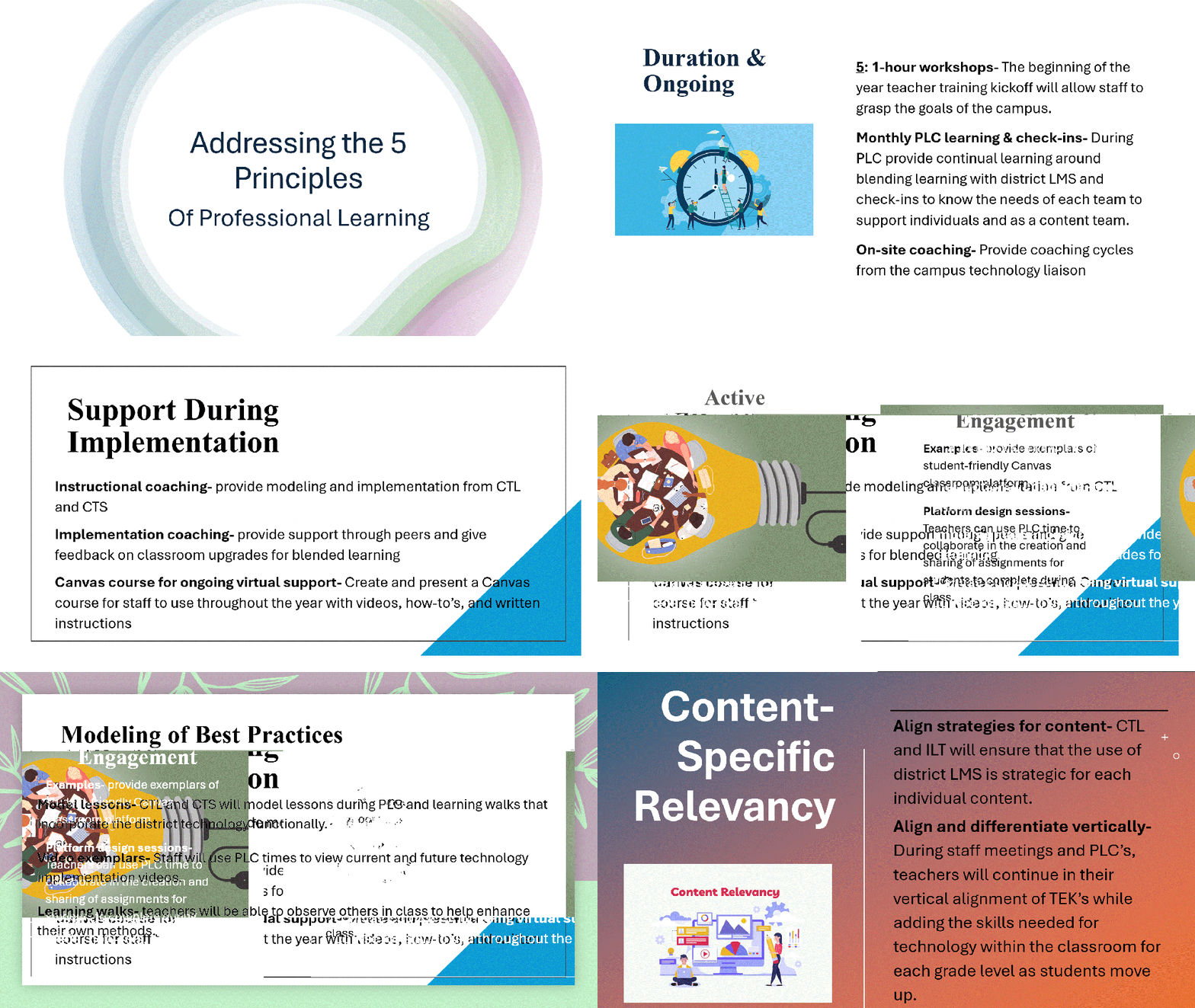
Reference of 5 Principles
Gulamhussein, A. (2013). Teaching the Teachers Effective Professional Development in an Era of High Stakes Accountability. Center for Public Education. Retrieved from http://www.centerforpubliceducation.org/system/files/2013-176_ProfessionalDevelopment.pdf
Big Hairy Audacious Goal
At the end of one semester of continuous professional learning, teachers will be able to access, set up, use, and extract data from Canvas to enhance effective teaching and learning.
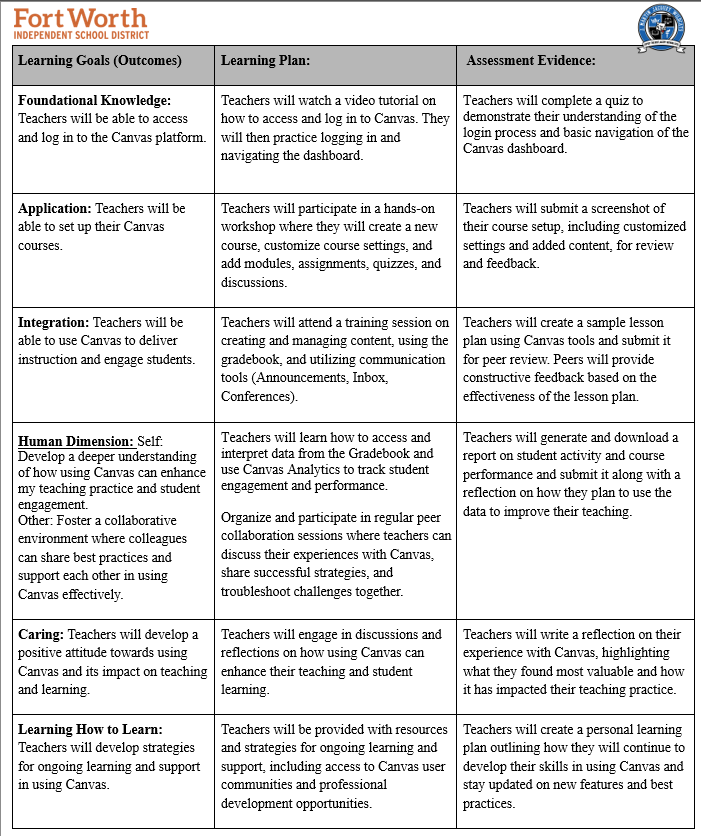
Collaboration of the Content
JMS staff will collaborate during PLC’s on content specific items to embed within the classroom. These strategies will lead to a more blended classroom that is fully vertically aligned, that will guide students into becoming more digitally responsible.
Duration and Outline of Professional Learning
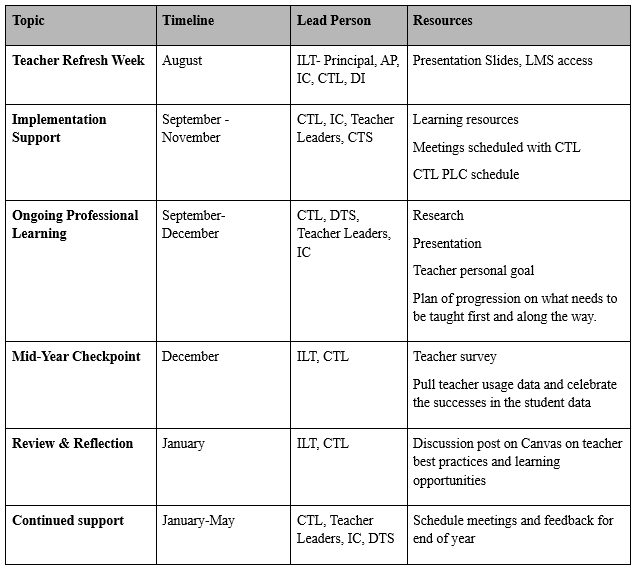
Key Players

References
Wei, R. C., Darling-Hammond, L., Andree, A., Richardson, N., & Orphanos, S. (2009). Professional Learning in the Learning Profession: A Status Report on Teacher Development in the U.S. and AAndrews, T. M., Leonard, M. J., Colgrove, C. A., & Kalinowski, S. T. (2011). Active Learning Not Associated with Student Learning in a Random Sample of College Biology Courses. CBE Life Sciences Education, 10(4), 394–405. http://doi.org/10.1187/cbe.11-07-0061
Goodwin, B. (2015). Research Says/Does Teacher Collaboration Promote Teacher Growth? Educational Leadership, 73(4), 82–83. Retrieved from http://www.ascd.org/publications/educational-leadership/dec15/vol73/num04/Does-Teacher-Collaboration-Promote-Teacher-Growth%C2%A2.aspx
Gulamhussein, A. (2013). Teaching the Teachers Effective Professional Development in an Era of High Stakes Accountability. Center for Public Education. Retrieved from http://www.centerforpubliceducation.org/system/files/2013-176_ProfessionalDevelopment.pdf
 Tech-nically Monique